Engineered for durability, high energy conversion efficiency, and grid integration across residential, agricultural, and microgrid applications.
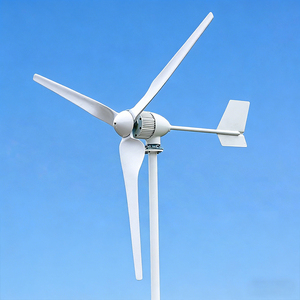
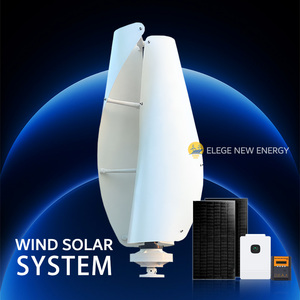
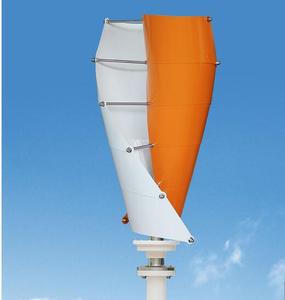
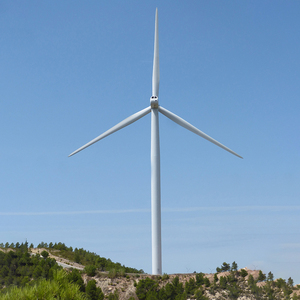
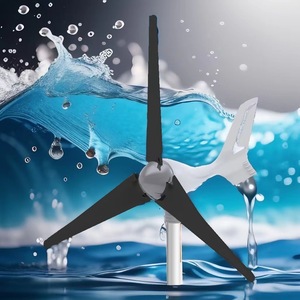
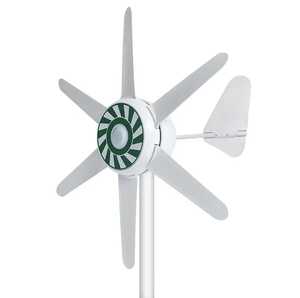
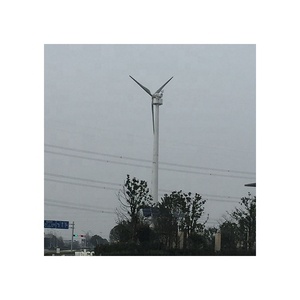
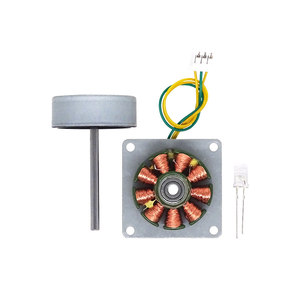
The global energy landscape is undergoing a structural paradigm shift from centralized carbon-intensive utilities to decentralized, resilient, and behind-the-meter (BTM) Distributed Energy Resources (DER). At the core of this transition is China’s advanced clean energy manufacturing ecosystem. Over the past two decades, Chinese original equipment manufacturers (OEMs) and component fabricators have matured from assembly-focused providers into world-leading innovators of direct-drive permanent magnet generators (PMG), low-noise aerodynamics, advanced power electronics, and artificial intelligence-managed wind-solar-storage microgrids.
Historically, small-scale wind power systems (ranging from micro-watt telemetry sensors up to 100 kW industrial-grade turbines) suffered from mechanical vulnerabilities—primarily gearbox friction, lubrication deterioration, and severe wear in high-turbulence environments. Drawing upon engineering benchmarks established by pioneering manufacturers like Eocycle (founded in Montréal, Canada in 2001), top-tier Chinese manufacturers have universally adopted gearbox-free direct-drive designs using high-grade Neodymium-Iron-Boron (NdFeB) permanent magnets.
For international buyers, commercial farm operators, facility managers, and energy system integrators, navigating Chinese suppliers requires an empirical understanding of drivetrain topology, aerodynamic cut-in thresholds, blade acoustic signatures, and total cost of ownership (TCO) dynamics. This document serves as an exhaustive procurement guide and technical white paper to streamline global procurement decisions.
When selecting clean energy hardware from Chinese suppliers, procurement executives must evaluate technical metrics beyond initial capital expenditure (CAPEX). Superior engineering manifests in continuous power production during sub-optimal wind conditions, grid compliance, and ruggedized survival in harsh climatic conditions—ranging from sub-zero agricultural environments in Alberta and Scotland to high-salinity coastal areas in Belgium and dust-heavy feedyards in Colorado.
Eliminating high-speed mechanical gearboxes completely removes the single primary failure point in small wind installations. Direct-drive permanent magnet generators provide maximum electrical output directly proportional to rotor rotation.
Modern Chinese wind generators integrate edge computing nodes that communicate telemetry (RPM, vibration, thermal profile, voltage output) directly to cloud platforms for real-time monitoring and predictive maintenance alerts.
Combining wind turbines with photovoltaic (PV) arrays and lithium battery storage systems (such as the EOX WS²+ architecture) ensures round-the-clock power generation, leveraging complementary daily and seasonal resource cycles.
Over the coming decade, B2B procurement strategies for clean energy hardware will evolve rapidly driven by regulatory mandates, corporate ESG commitments, grid congestion, and shifting utility tariff structures. Energy directors must position their supply chains to capture key macro-trends:
Standalone solar arrays often fall short during winter months and night-time operational shifts when commercial electricity rates reach peak surcharges. Wind energy generates round-the-clock, maintaining robust production profiles during cold weather and overnight periods. Future procurement will prioritize integrated Wind-Solar-Storage (WSS) systems managed by AI-based Energy Management Systems (EMS) that automatically arbitrage between self-generation, battery storage dispatch, and utility grid export.
Commercial enterprises, dairies, feedyards, cold-storage logisticians, and water utilities face aggressive Scope 2 carbon emission reduction targets from corporate buyers. BTM small wind turbines (25 kW to 90 kW platforms like the EOX M-26 down to micro 1 kW–5 kW units) yield the highest clean-energy energy output per square meter of ground footprint. Installing tall-tower wind assets allows farmland, parking structures, and yard logistics below to remain 100% operational.
International buyers are moving away from proprietary single-source component systems. Chinese manufacturers are standardizing generator stators, MPPT charge controllers, grid-tie inverters, and flange mounts in compliance with international certification frameworks (CE, IEC 61400-2, ISO 9001). This modularization ensures global access to replacement parts and certified partner servicing, protecting long-term ROI over a 30-year operational lifecycle.
To assist technical evaluation teams, the matrix below details the structural and electrical differences between standard market offerings and advanced direct-drive permanent magnet wind power systems produced by top Chinese suppliers:
| Evaluation Parameter | Traditional Gearbox Small Wind | Direct-Drive PMG (Horizontal Axis) | Omni-Directional (Vertical Axis) |
|---|---|---|---|
| Mechanical Complexity | High (Multi-stage planetary gearbox) | Low (Rotor directly coupled to stator) | Ultra-Low (Single vertical bearing axis) |
| Lubrication Requirements | Bi-annual gear oil replacement | Zero fluid replacement (Sealed bearings) | Zero fluid replacement |
| Cut-in Wind Speed | 3.5 m/s – 4.5 m/s | 2.0 m/s – 2.5 m/s | 1.5 m/s – 2.0 m/s |
| Acoustic Footprint | High (>55 dB due to gear mesh) | Low (<42 dB aerodynamic noise only) | Ultra-Quiet (<35 dB) |
| Design Service Life | 10 – 15 Years | 30 Years | 20 – 25 Years |
| Target Application | Legacy legacy utility projects | Farms, C&I Facilities, Microgrids | Urban Rooftops, Telecom, Lighting |
Addressing the critical engineering, economic, and logistical questions faced by commercial buyers during feasibility and vendor evaluation phases.
Selecting China’s premier clean energy suppliers affords international buyers distinct competitive advantages rooted in scale, supply chain integration, and technological refinement:
