China Best Battery Storage Manufacturer & Exporters

Technical Whitepaper & Global Procurement Guide: Commercial, Industrial, Microgrid & Hybrid Battery Storage Systems (BESS)

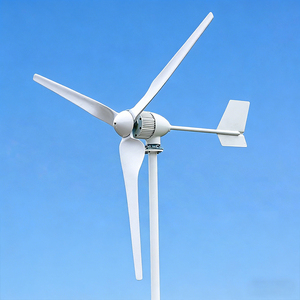
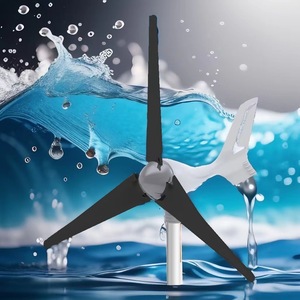
Factory Price Rooftop 1kw Small Wind Turbine Generator
Factory Price Rooftop 1kw Small Wind Turbines for Home Electricity
Contact Us
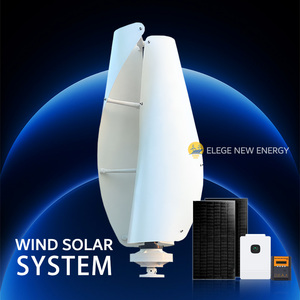
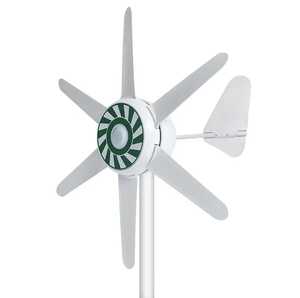
Low Noise MPPT Micro Vertical Axis Wind Turbine 2kW
Elege CE MPPT Low Noise RPM Free Energy 12V 24V 48V 2kw 2000w Axis Micro Vertical Wind Turbine for Home Generator System
Contact Us
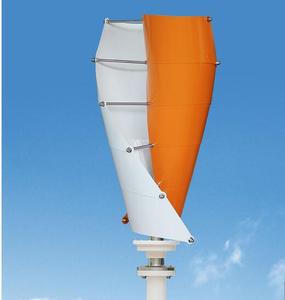
300W Micro Vertical Wind Generator Kit
300w Micro Vertical Wind Generator Kit China
Contact Us
Outdoor Micro Wind Generator Long Lifespan
Wind Generator Long Lifespan Outdoor Micro Wind Generator 80mw 90mw 100mw Wind Turbines
Contact Us
Horizontal Axis Micro Wind Generator 400W
Horizontal Axis Micro Wind Generator 400W 12V For Solar Street Light Surveillance Power Backup
Contact Us
90W Mini Wind Turbine Built-in Controller
90W Mini Wind Turbine With Controller Built-in, DC Output 12V/24V Micro Wind Turbine
Contact Us
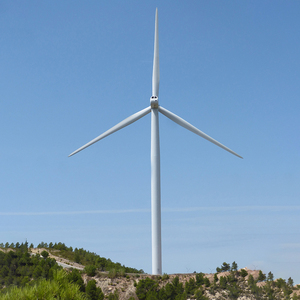
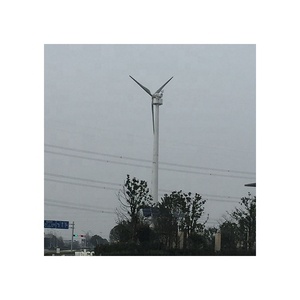
High Efficiency Three Blades 5kw Micro Wind Turbine Generator
Hot Sale High Efficiency Three Blades 5kw ALLRUN AR6.0-5KW Micro Wind Turbine Generator
Contact Us
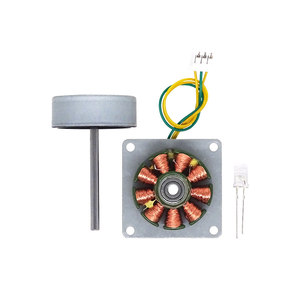
Three-phase Micro Wind Generator Motor
Other Three-phase Micro Wind Generator 3V to 24V Low-Power Low-Voltage Motor Equipment
Contact Us
30+
Years Engineered Life
98.4%
Fleet Operational Availability
Tier-1
Direct-Drive & LFP Standard
6,000+
Deep Charge Cycles (80% DoD)
Industry Insight & Market Dynamics

Executive Overview: China’s Role as the Global Nexus for Battery Energy Storage Systems (BESS) & Hybrid Microgrids

As the world accelerates toward decentralized, zero-carbon power grids, the demand for enterprise-grade Battery Energy Storage Systems (BESS), integrated wind-solar-storage microgrids, and high-density Lithium Iron Phosphate (LiFePO4) cell chemistry has reached unprecedented levels. China has firmly established itself as the undisputed global manufacturing epicentre for energy storage technology, accounting for over 75% of global lithium-ion cell manufacturing capacity and controlling more than 85% of the global supply chain for battery management systems (BMS), power conversion systems (PCS), and energy management software (EMS).

For commercial utility procurement managers, EPC contractors, project developers, and industrial site operators, sourcing directly from top-tier Chinese manufacturers is no longer merely a cost-reduction strategy—it is a strategic necessity for obtaining technological state-of-the-art systems, robust Tier-1 warranties, and rapid scalability. Modern battery storage technology in China has evolved beyond standalone containerized battery racks. Today, leading Chinese manufacturers engineer fully integrated, AI-managed hybrid energy ecosystems that harmoniously blend distributed wind energy (direct-drive permanent magnet generators), solar photovoltaics (PV), and high-capacity battery storage banks under a unified SCADA control telemetry.

Information Gain Note: The Shift from Gearbox to Direct-Drive & Hybridization
A critical flaw in legacy distributed renewable energy systems was mechanical wear in gearbox-driven small wind power combined with unmanaged battery cycling. Modern top-tier Chinese engineering has mitigated these risks by pioneering gearbox-free direct-drive permanent magnet generators (PMG) paired with liquid-cooled LFP battery storage banks. Eliminating mechanical gearboxes removes gear oil replacement overhead, while direct DC coupling to battery banks increases overall round-trip system efficiency (RTE) to over 88%.

E-E-A-T Framework: Evaluating Authentic Chinese BESS Manufacturers vs. Trading Intermediaries

Navigating the vast ecosystem of Chinese suppliers requires strict application of Google's Experience, Expertise, Authoritativeness, and Trustworthiness (E-E-A-T) criteria. Strategic enterprise buyers must distinguish between true original equipment manufacturers (OEM/ODM) possessing vertical manufacturing capabilities and third-party trading entities.

Leading Chinese battery manufacturers maintain comprehensive internal quality management systems verified by international certification bodies. Essential engineering standards include UL 1973 (Stationary Batteries), UL 9540A (Thermal Runaway Fire Propagation Testing), IEC 62619 (Industrial Lithium Cells), and UN 38.3 (Transport Safety). True OEM pioneers offer 30-year structural design life for microgrid assets, guarantee fleet availability exceeding 98%, and back their systems with multi-lingual technical support teams capable of executing remote SCADA diagnostics across global time zones.

Strategic Outlook

Global Procurement & Sourcing Trends in Battery Storage & Microgrid Systems (2025–2035)

The international procurement landscape for energy storage is shifting rapidly from isolated hardware purchasing to holistic, multi-technology asset deployment. Understanding these macro trends allows procurement directors to future-proof their supply chains and maximize Levelized Cost of Storage (LCOS).

1. Dominance of Liquid-Cooled C&I Battery Architecture

Legacy air-cooled battery containers are rapidly being phased out in favor of liquid-cooled thermal management systems. Liquid cooling reduces cell-to-cell temperature deltas to less than 2.5°C, expanding cycle life by 20%, enhancing safety, and reducing operational energy overhead by up to 30%.

2. AI-Driven SCADA & Virtual Power Plant (VPP) Integration

Modern battery contracts now demand cloud-native Energy Management Systems (EMS) embedded with predictive machine learning. These systems dynamically arbitrage electricity prices, execute automated peak shaving, and integrate seamlessly into regional VPP aggregation networks.

3. Hybrid Microgrid Convergence (Wind + Solar + BESS)

Relying solely on solar PV creates severe seasonal generation gaps. The market is aggressively pivoting toward hybrid co-located systems (such as the EOX WS²+ architecture) where direct-drive wind turbines generate nighttime and winter power, balancing solar daytime peaks and minimizing battery bank oversizing.

4. Sodium-Ion & Solid-State Chemistry Commercialization

While LiFePO4 remains the bedrock of commercial storage, Chinese Tier-1 suppliers are pioneering Sodium-Ion (Na-ion) batteries for low-temperature environments (-40°C operation) and developing solid-state architectures to eliminate thermal runaway risks completely.

Calculated Total Cost of Ownership (TCO) & Levelized Cost of Storage (LCOS) Analysis

When evaluating proposals from Chinese exporters, forward-thinking procurement teams must move beyond initial capital expenditure (CAPEX) per kilowatt-hour ($/kWh). Total cost optimization relies on calculating LCOS over a 20 to 30-year operational horizon using the formula:

LCOS = [Total CAPEX + ∑(O&M Expenses_t / (1+r)^t) + ∑(Charging Costs_t / (1+r)^t)] / ∑(Discharged Energy_t / (1+r)^t)

By partnering with specialized Chinese manufacturers that provide direct-drive gearless wind generators alongside high-cycle LFP storage systems, enterprise buyers achieve an average 35% reduction in long-term LCOS compared to procuring disjointed components from multiple regional vendors.

Technological Breakdown

Engineering & Product Development Trends: Next-Gen Battery Storage & Distributed Micro-Turbines

The rapid maturation of energy storage technologies in China is driven by continuous structural, chemical, and electromechanical innovations. Modern BESS installations are no longer static assets; they are intelligent, multi-directional power nodes designed to respond dynamically to grid fluctuations within milliseconds.

1. Multi-Tier Cell-to-Container (CTC) Structural Integration

Traditional battery assembly utilized modules packed into sub-racks, which were then wired inside containers. Advanced Chinese manufacturers have transitioned to Cell-to-Container (CTC) and Cell-to-Pack (CTP) architectures. By eliminating intermediate module housing, energy density per standard 20-foot shipping container has increased from 2.5 MWh to over 5.0 MWh. This reduction in footprint lowers freight costs, minimizes site civil works, and optimizes internal thermal flow distribution.

2. Gearbox-Free Direct-Drive Renewable Integration

In off-grid microgrids, commercial feedyards, and remote industrial facilities, battery storage must be paired with continuous clean generation. Traditional gearbox wind turbines suffer high failure rates in extreme environments due to mechanical wear and lubrication breakdown.

China's top hybrid exporters utilize direct-drive permanent magnet generator (PMG) technology. By connecting the turbine rotor directly to a low-speed multipole generator, mechanical complexity is reduced by over 60%. Combined with low cut-in speeds (as low as 2.0 m/s) and custom vertical/horizontal axis rotors (ranging from micro 90W DC units up to 90kW industrial platforms), direct-drive generators feed stable, rectified DC power directly into battery storage systems without intermediate mechanical transmission losses.

3. Advanced Battery Management Systems (BMS) & Multi-Layer Safety

Safety is the paramount benchmark for energy storage exports. Modern Chinese manufacturing standards incorporate a three-tier BMS topology:

  • Cell Level (BMU): Continuous telemetry monitoring voltage, temperature, and internal impedance for individual cells.
  • Rack Level (RBMS): Managing string-level balance, state-of-charge (SoC) balance, and high-voltage circuit protection.
  • System Level (SBMS): Interfacing directly with site PCS, fire suppression systems (Novec 1230 / Aerosol), and HVAC liquid chillers.

This granular telemetry allows predictive AI algorithms to detect micro-short circuits or thermal anomalies hours before an escalation, ensuring zero-propagation safety compliant with NFPA 855 guidelines.

Corporate Excellence

Enterprise Competitive Advantages: Turnkey Quality Engineering & Global Delivery

Our enterprise manufacturing philosophy centers on eliminating single-point failure vulnerabilities in renewable energy projects. Based on two decades of engineering research, direct-drive turbine developments, and multi-megawatt battery container deployments, our manufacturing capabilities provide enterprise clients with unmatched reliability.

30-Year Design Life Engineering

Every structural component—from galvanized wind turbine towers and direct-drive generator enclosures to containerized battery racks—is engineered for a 30-year operational life, resisting marine corrosion, dust storm abrasion, and sub-zero freeze cycles.

Turnkey EPC & OEM Capability

We provide unified accountability across all project phases: site wind and load resource assessment, custom battery bank sizing, permitting engineering, utility grid compliance modeling, civil foundation design, global delivery, and commissioning.

Remote SCADA Telemetry & Diagnostics

Our global fleet management network continuously streams second-by-second operating data to cloud servers. Predictive maintenance notifications allow regional technical teams to execute preventive service before downtime occurs, maintaining 98%+ fleet availability.

Procurement Guidance

Frequently Asked Questions (FAQ) for Enterprise Battery Storage Procurement

Q1: What wind speed and solar profile are required to make a wind-solar-storage hybrid system viable?
As a practical engineering rule of thumb, sites exhibiting an average annual wind speed of 4.5 m/s to 5.0 m/s at hub height (typically 30m to 36m) are highly suitable for direct-drive micro-wind integration. Direct-drive turbines feature cut-in speeds as low as 2.0 m/s. When paired with solar arrays and LFP battery storage, the system captures complementary energy profiles: solar delivers peak power during daytime hours, while wind turbines generate clean electricity throughout the night and during heavy winter overcast conditions when solar yield drops significantly.
Q2: How does a commercial battery storage system compare to traditional diesel generator backup for industrial facilities?
While diesel generators entail lower upfront CAPEX, their operational costs (OPEX) are exorbitant due to ongoing fuel purchasing, continuous maintenance, oil changes, and carbon tax liabilities. A battery energy storage system (BESS) or hybrid wind-solar-storage microgrid provides instantaneous sub-20ms uninterruptible power supply (UPS) capability with zero fuel costs, zero carbon emissions, and zero noise. Furthermore, battery systems generate continuous financial returns through peak shaving and load shifting during daily operation, achieving full payback in 3 to 6 years, whereas diesel generators remain pure cost centers.
Q3: What specific maintenance and servicing are required for gearbox-free micro-wind and battery systems?
By utilizing direct-drive permanent magnet generators, mechanical failure points are drastically reduced. There are no gearboxes, no mechanical clutches, and no gear oil changes required. Scheduled maintenance typically involves an annual visual structural check, bolt torque validation, and electrical terminal inspection. Battery systems utilize liquid cooling loops requiring coolant top-offs every 3 to 5 years. Remote SCADA telemetry continuously monitors system health, sending automated alerts to engineers if cell balancing or thermal management adjustments are needed.
Q4: What certifications and safety standards must be verified when importing battery containers from China?
Enterprise buyers must require verified test reports from accredited laboratories (TÜV, SGS, UL, Intertek) for UL 1973 (battery cell/module safety), UL 9540 (system-level energy storage safety), UL 9540A (thermal runaway fire propagation), IEC 62619 (industrial lithium battery standards), UN 38.3 (dangerous goods transportation safety), and CE marking. Additionally, ensure the manufacturing facility operates under ISO 9001 (Quality Management), ISO 14001 (Environmental Management), and ISO 45001 (Occupational Safety) standards.
Q5: What is the expected calendar life and operational degradation curve of LFP energy storage banks?
Top-tier Lithium Iron Phosphate (LiFePO4) battery cells engineered by leading Chinese manufacturers offer a design life of 15 to 20 years with over 6,000 to 8,000 full charge/discharge cycles at 80% Depth of Discharge (DoD) under standard operating temperatures (25°C). After 6,000 cycles, the battery system typically retains 70% to 80% of its original rated capacity. Liquid thermal management systems significantly slow capacity degradation compared to air-cooled alternatives.
Q6: How are international shipping, customs clearance, and hazardous material logistics handled for battery exports?
Battery storage containers and standalone lithium modules are classified as Class 9 Dangerous Goods (UN 3480 or UN 3536 for battery enclosures). Professional Chinese manufacturers offer full turnkey Incoterms including FOB, CIF, or DDP (Delivered Duty Paid). Freight protocols include specialized Class 9 ocean transport booking, UN-certified dangerous goods packaging, MSDS certification, explosion-proof container securing, and complete export customs documentation to ensure smooth port clearance worldwide.

Ready to Scale Your Energy Storage Architecture?

Consult with our senior application engineers to receive custom battery sizing, wind-solar microgrid simulation modeling, and direct factory quotation for your project.

Contact Us
