







Industrial Grade • CE Certified • Direct-Drive Technology

CE Certified Turbine Controller Factory & Supplier

Global OEM/ODM Engineering Whitepaper: MPPT Control, Microgrid Integration & 30-Year Utility Design Standards

Industrial Turbine Controllers & Micro Generator Systems

Explore our CE-certified range of micro wind turbine generators, MPPT intelligent controllers, and hybrid power management units engineered for off-grid, grid-tied, and distributed industrial applications.

Rooftop 1kW Factory Price Rooftop 1kw Small Wind Turbines for Home Electricity
Factory Price Rooftop 1kw Small Wind Turbines for Home Electricity
  • Rated Power: 1000W / 1kW
  • System Voltage: 24V / 48V DC
  • Controller Type: External MPPT
  • Certification: CE / ISO9001
Vertical Axis MPPT Elege CE MPPT Low Noise RPM Free Energy 12V 24V 48V 2kw 2000w Axis Micro Vertical Wind Turbine
Elege CE MPPT Low Noise 2kW Vertical Wind Turbine & Controller Kit
  • Rated Power: 2000W / 2kW
  • Voltage Class: 12V / 24V / 48V
  • Rotor Architecture: Low RPM Vertical
  • Braking System: Auto PWM Brake
Micro Kit 300W 300w Micro Vertical Wind Generator Kit China
300W Micro Vertical Wind Generator Kit & Built-in Controller
  • Rated Output: 300W Peak
  • Start-up Wind: 1.5 m/s
  • Application: Micro-Power Backup
  • Compliance: CE Standard
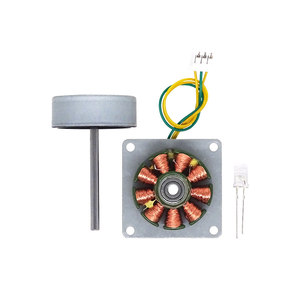
Low Power Outdoor Wind Generator Long Lifespan Outdoor Micro Wind Generator 80mw 90mw 100mw
Outdoor Micro Wind Generator 80mW–100mW with Precision Rectifier
  • Rated Power: 80mW – 100mW
  • Design Life: Long Lifespan
  • Generator: 3-Phase PMG
  • Protection: IP65 Outdoor
Street Light Hybrid Horizontal Axis Micro Wind Generator 400W 12V For Solar Street Light
Horizontal Axis Micro Wind Generator 400W 12V for Street Light Backup
  • Rated Power: 400W 12V DC
  • Application: CCTV & Street Lighting
  • Blades: High Efficiency Fiber
  • Control Unit: Smart Hybrid Controller
Mini Controller Integrated 90W Mini Wind Turbine With Controller Built-in
90W Mini Wind Turbine with Built-in DC 12V/24V Controller
  • Rated Output: 90W DC Output
  • Integration: Built-in Controller
  • Voltage Option: 12V / 24V Auto
  • Certification: CE Compliance
High Capacity 5kW Hot Sale High Efficiency Three Blades 5kw Micro Wind Turbine Generator
High Efficiency 5kW Commercial Wind Turbine & Smart Control Cabinet
  • Rated Capacity: 5000W / 5kW
  • Rotor Configuration: 3 Blades Horizontal
  • Interface: RS485 / SCADA
  • Use Case: Farm & Industrial Load
3-Phase Low Voltage Other Three-phase Micro Wind Generator 3V to 24V Low-Power Low-Voltage Motor Equipment
3-Phase Micro Wind Generator 3V–24V Low-Power Equipment Motor
  • Voltage Range: 3V to 24V AC/DC
  • Type: 3-Phase PM Synchronous
  • Efficiency: High Torque Low RPM
  • Market: OEM Sourcing
2001
Engineering Heritage
30 Yrs
Turbine Design Life
98%+
Fleet Availability Rate
100%
Gearbox-Free Direct Drive

Executive Technical Overview: The Central Role of Turbine Controllers in Modern Distributed Energy Systems

In distributed wind energy generation and microgrid architectures, the turbine controller represents the central neural intelligence of the system. While aerodynamic blades harvest kinetic power and permanent magnet synchronous generators (PMSG) convert mechanical motion into electrical voltage, it is the electronic turbine controller that dictates system reliability, energy harvest efficiency, safety regulation, and grid synchronization.

As an established CE Certified Turbine Controller Factory & Supplier with over two decades of power electronics and aerodynamic engineering heritage (originating from Montreal, Canada since 2001), our engineering philosophy centers on eliminating mechanical friction and maximizing solid-state power management. By pairing direct-drive permanent magnet generators with advanced Maximum Power Point Tracking (MPPT) microcontrollers and pulse-width modulated (PWM) dump-load braking systems, modern wind controllers achieve conversion efficiencies surpassing 98% while providing robust defense against severe weather phenomena, voltage spikes, and grid anomalies.

Key Engineering Standard: Compliance with European Union CE Directives—specifically Low Voltage Directive (LVD 2014/35/EU), Electromagnetic Compatibility (EMC 2014/30/EU), and Machinery Directive 2006/42/EC—is not merely a regulatory prerequisite; it represents the international benchmark for electrical insulation, electromagnetic noise immunity, structural safety, and grid compliance across global industrial installations.

Architectural Foundations of Industrial Turbine Control Units

Wind turbine control systems operate under highly dynamic, stochastic environmental conditions. Unlike steady-state solar photovoltaic arrays, wind generators encounter turbulent velocity fluctuations within milliseconds. A industrial-grade CE-certified controller must integrate four critical subsystems:

1. Dynamic MPPT & Rectification Subsystem

Variable-speed wind turbines generate variable-voltage, variable-frequency 3-phase AC power. Industrial controllers utilize low-loss MOSFET or IGBT-based active rectifiers combined with adaptive perturbs-and-observe or hill-climbing MPPT algorithms. The controller continuously samples generator RPM and DC-bus voltage, dynamically tuning the duty cycle to force the rotor to operate at its optimal Tip Speed Ratio (TSR), extracting peak power even at low cut-in wind velocities (1.5 m/s to 2.5 m/s).

2. Multi-Stage Over-speed & Over-Voltage Protection

Surge protection and brake management form the cornerstone of turbine longevity. CE-certified controllers employ a three-tier safety matrix: (a) Electronic PWM Dump Load dissipates excess energy into high-temperature ceramic resistors when battery banks reach absorption capacity; (b) Electromagnetic Stator Short-Circuit Braking slows the rotor down during storm-force gales (> 25 m/s); and (c) Aerodynamic Furling / Mechanical Disc Brake Actuation acts as a failsafe physical lock.

3. SCADA Telemetry & Remote Monitoring Interface

Modern industrial buyers demand comprehensive operational visibility. Certified control systems incorporate MODBUS RTU / RS485 communication protocols, CANbus connectivity, and integrated Ethernet/Cellular gateways. Operation data—including cumulative kWh production, instant rotor RPM, stator temperature, phase currents, and alarm logs—are streamed directly to cloud SCADA dashboards for predictive maintenance modeling.

4. Battery & Grid-Tied Inverter Management

Whether charging off-grid lead-acid, GEL, or LiFePO4 battery banks or interfacing with multi-kilowatt grid-tie inverters, the controller regulates DC output parameters with extreme precision. Integrated temperature compensation probes adjust battery charge voltages dynamically, preventing thermal runaway and extending energy storage lifespan up to 30%.

Enterprise Advantage: Two Decades of Gearbox-Free Engineering Excellence

Originating in Montreal, Canada in 2001, our engineering team set out to systematically eliminate the dynamic points of failure in distributed wind generators: mechanical gearboxes and high-maintenance contactors.

Gearbox-Free Direct Drive

By coupling the rotor directly to a multi-pole permanent magnet generator (PMG), we eliminate gear oil changes, gear wear, and mechanical friction losses. This architecture yields an industry-leading reported fleet availability exceeding 98% across harsh environments—from sub-zero Canadian winters to high-salinity Belgian coastal zones.

30-Year Utility Service Life

Industrial turbine controllers and generator housings are engineered for three decades of continuous service. Heavy-duty cast aluminum enclosures, IP67 seals, surface-treated circuit boards, and oversized thermal sinks ensure reliable heat dissipation and resistance against environmental degradation.

Turnkey Microgrid Integration

Our flagship solutions—such as the integrated EOX WS²+ Wind-Solar-Storage System—combine wind turbines, photovoltaic panels, and lithium battery banks under a unified AI-driven energy management system. The controller automatically arbitrages energy production against real-time consumption profiles.

Proven Global Operational Track Record

"Renewables are a vital operational pillar across our agricultural sites in Colorado and Kansas. Implementing direct-drive turbines with intelligent SCADA controllers allows us to eliminate demand surges, cut baseline energy costs, and guarantee power supply continuity."

— Erick Farmer, Champion Valley Feedyard (Colorado, USA)

Future Procurement Trends in Distributed Wind & Controller Manufacturing

As global commercial enterprises, feedyards, industrial sites, and microgrid developers seek independence from utility tariff volatility, the market requirements for turbine controllers are undergoing rapid technical evolution. B2B procurement teams must consider the following emerging technology trends:

1. Wide DC-Bus Voltage Adaptability

Legacy controllers were restricted to fixed 12V or 24V battery systems. Modern industrial sourcing mandates ultra-wide DC bus compatibility (from 48V to 600V DC). High-voltage DC buses minimize copper cabling loss across long tower drops and seamlessly interface with industrial commercial battery energy storage systems (BESS).

2. AI-Driven Edge Analytics & Maintenance

Next-generation CE controllers feature onboard ARM-cortex microprocessors running predictive AI algorithms. By analyzing high-frequency voltage ripple, vibration harmonics, and stator thermal shifts, the controller flags bearing wear or blade imbalance weeks before catastrophic mechanical failure occurs.

3. Smart Grid & Demand-Response Compliance

Grid operators worldwide are enforcing strict grid-code compliance for distributed renewable generation. Advanced controllers support active power curtailment, reactive power compensation (VARS), and frequency response regulations, turning small wind assets into grid-supporting virtual power plants (VPP).

B2B Controller Selection & Engineering Spec Matrix

Select the optimal control cabinet architecture based on system power scale and deployment scope:

Capacity Class System Voltage Range Control & Rectification Safety / Braking Mechanism Primary Target Application
Micro (80mW – 400W) 12V / 24V DC Auto-sensing Pass-through Bridge Rectifier + PWM Integrated PWM Dump Load Solar Street Lights, Telecom Backup, CCTV
Small (1kW – 3kW) 24V / 48V / 96V DC Digital MPPT Step-Up/Step-Down Dual PWM Brake + Manual Switch Residential Off-Grid, Remote Cabins, Dairies
Medium (5kW – 10kW) 48V / 120V / 240V DC DSP-Controlled Active Power Tracking Triple Protection: Dump Load + Stator Short + Furling Commercial Farms, Small Factories, Island Microgrids
Industrial (25kW – 90kW) 360V – 600V DC / Grid Tie Full IGBT Active Front-End SCADA PLC-Governed Aerodynamic & Hydraulic Brake Feedyards, Industrial Plants, Community Microgrids

Frequently Asked Questions (FAQ) for Global Buyers & OEM Sourcing Engineers

Comprehensive answers to common procurement, technical integration, and regulatory compliance queries regarding CE-certified turbine controllers.

Q1 What specific CE standards must a industrial wind turbine controller comply with for European and global markets?

A fully compliant CE-certified turbine controller must satisfy three mandatory directives: (1) Electromagnetic Compatibility (EMC) Directive 2014/30/EU under EN 61000-6-2 (industrial immunity) and EN 61000-6-4 (industrial emissions); (2) Low Voltage Directive (LVD) 2014/35/EU under EN 60204-1 for electrical safety of machinery; and (3) IEC 61400-2 / IEC 61400-12 small wind turbine safety standards. Certification verifies that high-frequency switching noise from rectifiers or MPPT converters will not interfere with surrounding telecommunications, and that electrical insulation prevents shock hazards up to rated impulse voltages.

Q2 How does an MPPT turbine controller differ from a standard solar MPPT controller?

While solar MPPT controllers manage relatively slow IV curve changes caused by solar irradiance shifts, wind turbine controllers must handle extreme kinetic inertia and rapid power spikes within milliseconds. Wind controllers require dynamic curve-matching algorithms tuned to the turbine rotor's specific Tip Speed Ratio (TSR). Furthermore, wind controllers include integrated 3-phase AC rectifiers, over-speed dump-load management circuits, and generator stator braking controls—features completely absent in solar charge controllers.

Q3 What minimum wind resource is required for an enterprise wind turbine & controller installation to deliver economic payback?

As a practical engineering rule, sites with an average annual wind speed of 4.5 m/s to 5.0 m/s (10–11 mph) at hub height warrant a detailed feasibility study. Modern high-efficiency controllers feature low cut-in tracking, initiating energy capture at speeds as low as 1.5 m/s to 2.0 m/s. Tall tower configurations (typically 30m to 36m) elevate the turbine above ground turbulence, enabling payback periods between 4 to 7 years depending on local electricity tariffs and incentive frameworks.

Q4 What maintenance and inspection routines are required for direct-drive turbine control cabinets?

Because direct-drive architectures eliminate gearboxes and gear oil, maintenance is significantly reduced. Controller maintenance typically involves annual visual and thermal inspections: tightening terminal block torque settings, checking surge protection devices (SPD) status indicators, inspecting dump-load ceramic resistor banks for dust accumulation, and testing automated braking functions. Integrated SCADA systems perform continuous self-diagnostics, alerting engineers to minor voltage imbalances before component wear occurs.

Q5 Can your factory supply custom OEM/ODM controller hardware and firmware configurations for proprietary generator designs?

Yes. As an original equipment manufacturer, we provide turnkey OEM/ODM engineering services. We custom-configure MPPT voltage tables, modify PWM dump-load engagement points, customize communication protocols (Modbus, CAN, Profibus), adapt enclosure ingress ratings (IP65 to IP68), and brand control interfaces to match your company's commercial specifications.

Q6 How does an integrated Wind-Solar Hybrid Controller optimize battery life in off-grid systems?

Wind and solar energy profiles are naturally complementary; solar peaks during sunny daytime hours, while wind power often peaks during nighttime hours and storm fronts. A unified hybrid controller balances charging currents from both sources simultaneously under a master state-of-charge (SoC) management program. This prevents deep battery discharge cycles during cloudy nights and prevents overcharging during peak daytime sun, extending total battery cycle life by 25% to 40%.

Request Engineering Specifications & Factory Direct Quotations

Partner with a premier CE Certified Turbine Controller Supplier. Our technical team is ready to assist with site load modeling, custom OEM controller development, or turnkey microgrid design.

Send an Inquiry