Explore factory-direct equipment engineered with low cut-in wind velocities, direct-drive permanent magnet generators (PMG), and intelligent remote SCADA monitoring.







In the evolving global energy transition, procurement managers, system integrators, and agricultural operators face unprecedented utility grid volatility. Sourcing CE Certified power generator systems is no longer merely a regulatory compliance check—it represents a fundamental capital deployment strategy to achieve energy autonomy, minimize Levelized Cost of Energy (LCOE), and guarantee operational resilience.
To navigate the global supply ecosystem effectively, industrial buyers must evaluate power generator factories through the lens of structural engineering longevity, electromagnetic converter efficiency, and grid-code compliance standards (including EN 61400-2 for small wind turbines and IEC 61000 for electromagnetic compatibility). Factories delivering modern distributed energy resources (DER) have shifted away from traditional gear-driven mechanical setups toward direct-drive Permanent Magnet Generators (PMG).
Historically, power generator assemblies relied on high-speed gearboxes to step up rotational velocity from wind rotors or mechanical shafts. However, in field environments—ranging from saline coastal microgrids to dust-laden agricultural feedyards—the gearbox proved to be the single primary point of mechanical failure. Gearbox friction leads to continuous lubricant degradation, thermal dissipation losses, and scheduled downtime every 18 to 24 months.
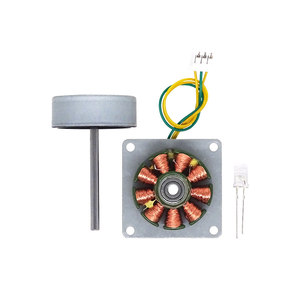
Leading OEM/ODM suppliers now standardize on direct-drive permanent magnet synchronous generators. By eliminating the gearbox entirely, mechanical moving parts are reduced by over 60%, removing the requirement for synthetic oil replacement and extending operating lifespans to 30 years. Furthermore, direct-drive topologies lower cut-in thresholds to as low as 1.5 m/s, capturing low-velocity air streams that traditional gear-driven units fail to harness.
Neodymium-Iron-Boron (NdFeB) permanent magnets deliver ultra-high torque density at low rotational speeds, achieving >96% mechanical-to-electrical energy conversion without gearbox parasitic losses.
Certified factory compliance with European Directive 2006/42/EC (Machinery Directive), 2014/35/EU (Low Voltage Directive), and structural wind safety validation up to 60 m/s survival speeds.
Integrated maximum power point tracking algorithms optimize rectification curves in real-time, streaming telemetry via IoT SCADA modules for predictive remote maintenance.
A comparative engineering evaluation across power generation architectures for procurement decision-makers.
| Generator Topology | Cut-In Speed | Peak Electrical Efficiency | Maintenance Cycle | Expected Service Life | Primary Application Profile |
|---|---|---|---|---|---|
| Horizontal Axis Direct-Drive PMG (HAWT) | 2.0 - 2.5 m/s | 94% - 97% | Annual Visual Inspection | 30 Years | Commercial Farms, Industrial Feeders, On-Grid Net Metering |
| Vertical Axis Maglev Generator (VAWT) | 1.2 - 1.8 m/s | 86% - 91% | Bi-Annual Bearing Check | 20 - 25 Years | Urban Rooftops, Telecommunications, Low-Noise Enclosures |
| Micro-Watt Sensing Generators (DC Array) | 1.0 - 1.5 m/s | 82% - 88% | Zero Maintenance (Sealed) | 15 - 20 Years | IoT Remote Sensors, Highway Lighting, Marine Buoys |
| Hybrid Solar-Wind Energy Systems (EOX WS²+) | Dynamic (Solar + Wind) | 98.2% Integrated System | Quarterly Digital Diagnostics | 25 - 30 Years | Isolated Microgrids, EV Charging Stations, Off-Grid Facilities |
Analyzing global market dynamics reveals a decisive transition from centralized, fossil-fueled emergency generators toward hybrid distributed renewable energy platforms. As corporate ESG metrics, carbon tariffs (such as CBAM in Europe), and utility demand-charge penalizations increase, B2B power generator sourcing strategies are evolving rapidly.
Stand-alone generation assets—whether purely solar or single diesel gensets—suffer from intermittency and volatile operating costs. The global trend among top-tier manufacturers favors behind-the-meter (BTM) hybrid systems. Wind energy naturally complements solar PV arrays: solar generation peaks during midday hours in summer, whereas wind resources peak during night hours and cold winter seasons. Combining low-RPM wind turbines with solar arrays and lithium iron phosphate (LFP) battery storage under a unified AI energy management engine yields dynamic baseload reliability.
Modern CE-certified generator suppliers are no longer just metal fabricators—they are software-enabled hardware suppliers. Today’s industrial generators come equipped with edge computing microcontrollers that monitor local utility grid pricing signals. When grid electricity prices spike during peak demand windows, the smart generator and battery system automatically discharge behind the meter, isolating the commercial enterprise from peak tariff penalties.
Global procurement offices are demanding elevated bill-of-materials (BOM) transparency. Turbines engineered for harsh environments utilize hot-dip galvanized steel towers (ISO 1461 compliant), carbon-fiber-reinforced blades, and marine-grade epoxy coatings. Buyers are prioritizing factories that hold audited ISO 9001, ISO 14001, and third-party CE structural certification to mitigate supply-chain warranty risks.
Partnering with vertically integrated production lines guarantees end-to-end technical support, customized voltage matching, and long-term spare-parts availability.
From initial hub-height wind resource assessment (using CFD aerodynamic modeling) to local municipal permitting support, our certified partner network ensures your power installation is sized precisely to your facility's load profile.
Whether your application requires 12V/24V DC battery charging, 3-phase 380V/415V industrial grid tie-in, or high-voltage DC bus interfaces for microgrids, factory winding schemes are custom-tailored during fabrication.
Every generator platform undergoes full-load factory testing prior to export packaging. Backed by multi-year equipment warranties and expedited component dispatch across North America, Europe, and Asia-Pacific.
Address critical engineering questions prior to submitting your project Request for Quotation (RFQ).
Legitimate CE compliance for electrical generators requires compliance documentation under the Low Voltage Directive (2014/35/EU) and Electromagnetic Compatibility Directive (2014/30/EU). For small wind turbines, compliance with EN 61400-2 (Safety of Small Wind Turbines) must be validated by an accredited Notified Body. Request the full Declaration of Conformity (DoC) and test reports before placing purchase orders.
As a practical engineering rule, sites with an average annual wind speed of 4.5 m/s to 5.0 m/s at hub height offer viable financial returns. Because power output increases cubically with wind speed (P ∝ v³), elevating the hub height from 18m to 30m or 36m frequently elevates output by 30% to 50%, overcoming local ground friction and building shadows.
Wind generation offers a significantly higher power density per square meter of ground footprint compared to solar PV arrays. Furthermore, wind turbines generate continuous electricity overnight, through winter storms, and during overcast conditions when solar yield drops to near zero. A balanced hybrid deployment delivers the lowest total system energy cost.
Direct-drive permanent magnet generators eliminate gear oil changes and high-speed mechanical wearing components. Recommended routine servicing is reduced to an annual structural inspection—verifying guy-wire tension (or tower bolt torque), inspecting blade leading-edge tape, and checking electrical connections. SCADA telemetry provides real-time vibration and temperature alerts.
Yes. Modern MPPT hybrid controllers feature dry-contact relay outputs and MODBUS/CAN communication channels designed to interface with automatic generator start (AGS) modules on standard diesel gensets. When wind and battery levels drop below pre-set thresholds, the system commands diesel backup automatically, optimizing fuel efficiency.
Connect directly with our engineering team to request detailed technical datasheets, CAD tower drawings, factory pricing lists, and custom system yield simulations.
