As global industrial energy consumers face rising grid tariffs, volatile fuel markets, and stringent Scope 2 carbon auditing standards, CE-certified micro wind turbine systems have emerged as a premier distributed energy resource (DER). Designed for off-grid microgrids, agricultural installations, and commercial energy storage integration, direct-drive micro wind technology delivers continuous zero-emission power even under extreme climatic conditions.







Founded in Montréal, Canada in 2001, our engineering philosophy was born out of a critical mission: eliminating the primary single point of failure in distributed wind energy — mechanical gearboxes. Traditional geared micro turbines rely on complex mechanical transmissions requiring frequent oil flushes, shaft realignment, and high maintenance operational expenditure.
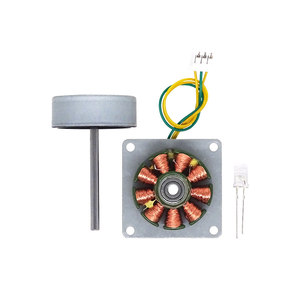
Our permanent magnet generators (PMG) couple the aerodynamic rotor directly to the electrical generator stator. By removing mechanical gears, drivetrain torque losses are minimized, cut-in wind speed thresholds are lowered, and mechanical wear is virtually eliminated.
Engineered with marine-grade anti-corrosion coatings, heavy-duty sealed bearing cartridges, and aerofoil blade geometry tested against severe gales and extreme temperature cycles, offering an industry-leading 30-year operational lifespan.
Integrated cloud SCADA portals broadcast real-time electrical output, vibration signatures, thermal dynamics, and wind speed telemetry. Automated diagnostics guarantee fleet availability upwards of 98% across harsh global deployments.
Procuring micro wind generator sets for European Union, North American, or international jurisdictions requires strict compliance with international electrotechnical standards. CE marking ensures that micro wind turbines meet fundamental health, safety, and environmental protection directives. When auditing prospective factories and OEMs, buyers must evaluate certified compliance across four primary technical pillars:
| Regulatory Standard / Directive | Technical Scope & Assessment Criteria | Operational Impact for Buyers |
|---|---|---|
| EN / IEC 61400-2 | Design requirements for small wind turbines; structural integrity, blade fatigue, mechanical braking. | Prevents catastrophic failure under extreme wind loads (up to Class I survival wind speeds of 59.5 m/s). |
| 2014/35/EU (Low Voltage Directive) | Electrical safety evaluation for equipment operating between 50-1000V AC and 75-1500V DC. | Ensures operator safety, insulation protection, and grid-inverter protection against over-voltage spikes. |
| 2014/30/EU (EMC Directive) | Electromagnetic Compatibility; suppression of conducted and radiated electrical interference. | Guarantees clean power quality without disrupting nearby communications, microgrids, or telemetry systems. |
| 2006/42/EC (Machinery Directive) | Risk assessment of moving components, blade retention mechanisms, emergency shutdown systems. | Required for legal site permitting, worker occupational safety, and facility insurance compliance. |
The micro wind turbine landscape is undergoing rapid innovation, driven by advances in power electronics, aerodynamic materials, and hybrid energy storage integration. Enterprise buyers must align procurement strategies with these core industry shifts:
Modern micro wind converters utilize high-speed digital signal processors (DSP) executing dynamic Maximum Power Point Tracking (MPPT) algorithms. By continuously matching generator load impedance to fluctuating wind velocities, modern MPPT charge controllers extract up to 35% more annual energy yield (AEY) compared to legacy fixed-voltage systems, particularly in low and turbulent wind regimes.
Stand-alone wind or solar installations face seasonal and diurnal intermittency. The strategic trend in industrial decarbonization is the rapid deployment of hybrid architectures—such as the EOX WS²+ system—combining direct-drive micro wind turbines, photovoltaic arrays, and lithium-ion energy storage systems (BESS) under a unified AI energy management engine.
Innovations in carbon-fiber reinforced polymers (CFRP) and injection-molded precision aerofoils enable blades to maintain high lift-to-drag ratios at low wind speeds. Micro turbines now achieve cut-in speeds as low as 1.5 m/s to 2.5 m/s, making urban, rooftop, and light-wind agricultural installations economically viable.
Noise pollution concerns have historically challenged urban micro wind sites. Next-generation vertical axis wind turbines (VAWT) and noise-optimized horizontal axis blades (HAWT) feature specialized trailing-edge serrations and low-RPM multi-pole generators, reducing operational noise to under 45 dB(A) at 10 meters.
Procurement directors and EPC contractors are altering how they source micro wind equipment. To optimize Levelized Cost of Energy (LCOE) and prevent premature equipment decommissioning, procurement guidelines emphasize three emerging strategies:
Enterprise buyers are moving away from component-only procurement. High-tier sourcing now demands turnkey delivery: site wind resource assessment, tower foundation engineering, grid interconnection filings, equipment supply, installation, and long-term O&M under a single contractual partner.
Due diligence requires rigorous factory verification. Buyers audit magnet grades (Neodymium N42SH+ rated for thermal demagnetization resistance), generator winding vacuum pressure impregnation (VPI), and certified ISO 9001/14001 production processes.
Procurement evaluation has shifted from upfront Capital Expenditure (CAPEX) to 30-year Total Cost of Ownership (TCO). A slightly higher initial capital investment in a CE-certified, direct-drive turbine delivers significantly lower Operational Expenditure (OPEX) and superior financial ROI over 30 years.
As a general screening rule, sites with an average annual wind speed of 5.0 m/s (approx. 11 mph) or higher at hub height yield solid financial returns. Modern direct-drive micro wind turbines begin producing electricity at cut-in speeds around 2.0 to 2.5 m/s. Utilizing taller guyed or self-supporting towers (typically 18m to 36m) allows the rotor to elevate above terrain turbulence, boundary layer drag, and obstacle shading, maximizing clean kinetic capture.
Wind and solar generation profiles are naturally complementary. Rooftop solar generation peaks during midday hours and drops sharply in late afternoon, winter months, and overcast conditions. Wind power regularly peaks during nighttime hours, storm fronts, and winter seasons when solar yield is minimal. Combining micro wind with solar PV flattens the generation curve, optimizes battery state-of-charge, and reduces expensive grid demand charges.
Because direct-drive permanent magnet generators eliminate mechanical gearboxes, oil replacements and shaft alignments are completely avoided. Routine scheduled maintenance typically consists of an annual physical inspection: checking bolt torque specifications, inspecting blade surfaces for erosion, verifying electrical terminal connections, and greasing main bearing housings. Cloud-connected SCADA monitoring continuously tracks thermal, electrical, and vibration parameters to enable predictive servicing.
Buyers should request full CE conformity documentation, including test reports for IEC 61400-2 (small wind turbine safety), EN 61000-6-3 (Electromagnetic Compatibility), and Low Voltage Directive compliance. Additionally, factory ISO 9001 quality management certificates, power curve verification reports from independent testing bodies, and comprehensive warranty coverage terms (typically 5 to 10 years minimum with 30-year design life modeling) should be verified.
CE-certified micro wind turbines incorporate multi-layered safety mechanisms. When wind speeds exceed rated thresholds (typically 20 m/s to 25 m/s), systems employ automated aerodynamic furling, mechanical disc brakes, or electronic short-circuit braking (dump loads). High-end turbines are rated to withstand Class I survival wind speeds up to 59.5 m/s without structural deformation or blade damage.
Partner with experienced engineers to model your site wind resources, evaluate interval load files, and select the optimal direct-drive micro wind turbine platform for your enterprise or project.
