0%

China has become the world’s largest wind power market, creating strong demand for integrated project delivery. According to IRENA’s Renewable Capacity Statistics 2024, China added approximately 75.9 gigawatts of wind capacity in 2023. Its total wind capacity exceeded 440 gigawatts. The Global Wind Energy Council reported a similar expansion in its Global Wind Report 2024. These figures explain why China’s leading Turnkey Wind Power Projects attract global attention.

A turnkey project normally covers feasibility studies, engineering design, turbine procurement, civil works, electrical systems, grid connection, commissioning, and sometimes operations support. China’s strongest examples are found in large onshore bases across Inner Mongolia and Gansu, plus offshore clusters near Jiangsu, Guangdong, and Fujian. Each site presents different conditions. Desert foundations face sand and extreme temperatures. Offshore projects require corrosion control, marine logistics, and stronger subsea cables.

Capacity alone can mislead. A large project is not automatically a successful project. Reliable evaluation should examine construction safety, turbine availability, annual energy yield, transmission performance, environmental monitoring, and lifecycle cost. The National Energy Administration’s renewable energy reports also show China’s growing emphasis on grid integration and clean electricity consumption. That shift matters.

The label is not flawless.

Some projects may appear efficient during construction but reveal maintenance or curtailment problems later. Therefore, this overview compares China’s top turnkey wind developments through measurable delivery quality, operating experience, technical complexity, and long-term value. The evidence comes from public industry reports, government statistics, and project-level information where available. Performance data can change, so careful verification remains necessary.
What Are China Top Turnkey Wind Power Projects?

Definition and Scope of Turnkey Wind Power Projects in China

In China, a turnkey wind power project covers the route from a prepared concept to commercial operation. It normally combines wind assessment, geotechnical surveys, design, procurement, construction, testing, and handover. The contractor coordinates turbines, foundations, internal roads, collection lines, substations, control systems, and grid connection. Offshore projects may also include seabed surveys, transport vessels, marine foundations, and underwater cables. Not a small task.

The “top” projects are not defined by capacity alone. Strong examples usually balance reliable generation, safe construction, grid compatibility, and long-term maintainability. Onshore sites may require reinforced access roads across dry plateaus or mountainous terrain. Offshore sites must address salt exposure, strong waves, typhoons, and difficult maintenance windows. A practical turnkey scope should specify output guarantees, testing procedures, spare parts, digital monitoring, training, and defect-response periods.

However, turnkey does not remove every responsibility from the owner. Land rights, financing, environmental approvals, and some grid decisions may remain outside the contractor’s control. This boundary needs careful wording in the contract. A weak wind study can undermine an impressive construction schedule. Delayed grid access can leave completed equipment idle. Experienced project teams therefore review wind data, soil conditions, logistics, local weather, and transmission limits before signing. Some plans still look perfect on paper. Field conditions often disagree.

Key Components and Delivery Stages of a Turnkey Wind Farm

What Are China Top Turnkey Wind Power Projects?

Key Components and Delivery Stages of a Turnkey Wind Farm

A top turnkey wind power project in China is delivered as one coordinated system, not as separate equipment packages. The core scope usually includes wind turbines, foundations, internal roads, collector lines, substations, control systems, and grid connection facilities. Site surveys also cover wind resources, terrain, transport access, and environmental constraints. On complex mountain sites, a small change in road alignment can affect foundation costs and construction time.

Delivery begins with feasibility studies, resource assessment, and preliminary design. Detailed engineering then defines turbine spacing, cable routes, drainage, crane platforms, and safety controls. Procurement follows, with strict checks for component quality, documentation, and delivery schedules.

Heavy blades and tower sections may require temporary road reinforcement. Delays often start with overlooked bridge limits or seasonal weather.

Construction proceeds through civil works, foundation casting, electrical installation, turbine erection, and control-system integration. Each foundation needs inspection before turbine assembly. After energization, commissioning teams test protection systems, communication links, power quality, and emergency shutdown functions. Performance testing follows under different wind conditions.

The process is rarely perfect. Design assumptions may need revision after actual soil conditions appear. Reliable teams record these changes, explain their impact, and correct them before handover.

Operational training, maintenance manuals, spare-part planning, and final technical documentation complete the delivery.

Leading Types and Locations of China’s Turnkey Wind Projects

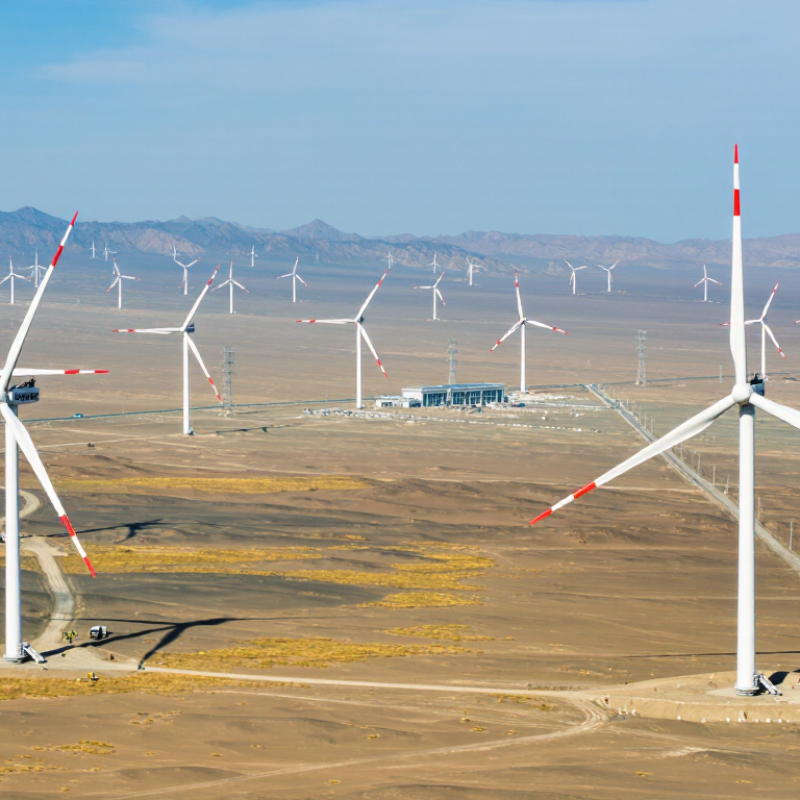
China’s leading turnkey wind power projects differ by terrain, grid access, and wind conditions. Onshore projects remain widespread across Inner Mongolia, Gansu, Xinjiang, and Hebei. They often combine turbine delivery, road construction, substations, transmission lines, and final commissioning. In these dry northern regions, wide open land supports large wind bases. However, sand, frozen soil, and long distances can complicate construction schedules.

Offshore wind projects are concentrated along the eastern and southeastern coastline. Jiangsu, Zhejiang, Fujian, Guangdong, and Shandong provide strong coastal winds and nearby electricity demand. A turnkey offshore contract may cover seabed surveys, foundation installation, underwater cables, offshore substations, and marine transport. Saltwater corrosion requires careful material selection. Weather windows are short, so minor delays can become expensive.

Distributed wind projects serve factories, industrial parks, farms, and isolated communities. They usually use smaller turbines and connect closer to local loads. Some projects combine wind, solar generation, battery storage, and digital energy management. This approach can reduce transmission pressure, but performance depends on accurate local wind measurements. A map can suggest strong resources, yet actual turbulence may weaken output. Project planning still needs independent surveys, transparent cost estimates, and practical maintenance arrangements. Not every large project is automatically the best project.

What Are China Top Turnkey Wind Power Projects? - Leading Types and Locations of China’s Turnkey Wind Projects

Project Type Leading Locations in China Typical Turnkey Scope Indicative Project Scale Key Site Characteristics Grid and Infrastructure Requirements Development Outlook
Large Onshore Wind Bases Inner Mongolia, Gansu, Ningxia, Xinjiang, northern Hebei Wind measurement, resource assessment, engineering design, turbine foundations, roads, collection systems, substations, transmission connection, commissioning and operations support Hundreds of MW to multi-GW clusters
Individual phases commonly use utility-scale turbines rated above 5 MW in high-wind areas
Wide open land, strong and relatively consistent wind resources, low population density, cold or arid climates Long-distance transmission, high-voltage substations, access roads, desert foundation design and dust or freezing protection One of China’s principal turnkey formats, especially within large renewable-energy base programs in northern and western regions
Desert and Gobi Renewable-Energy Bases Gobi areas of Inner Mongolia, Gansu, Ningxia and Xinjiang Integrated wind-plant construction with shared substations, transmission corridors, digital monitoring, energy storage and complementary solar generation Multi-GW integrated bases
Wind capacity is planned as part of larger renewable-energy complexes rather than as isolated projects
Very low rainfall, sandy or gravel terrain, high solar irradiance, large distances from coastal electricity demand Flexible power-management systems, grid-support equipment, large-scale transmission and coordinated dispatch with solar and storage High-priority development model under China’s large-scale renewable-energy base strategy
High-Altitude Onshore Wind Qinghai, western Sichuan, southern Gansu and parts of Tibet Specialized surveying, cold-weather turbine selection, high-altitude logistics, civil works, electrical installation and remote asset monitoring Utility-scale projects from tens to hundreds of MW Thin air, steep terrain, winter icing, difficult transport conditions and environmentally sensitive landscapes Upgraded construction logistics, weather-resistant equipment, reinforced road planning and carefully managed ecological restoration Suitable where strong wind resources offset higher construction, transportation and maintenance costs
Northern Coastal Offshore Wind Jiangsu, northern Shandong and Liaoning coastal waters Marine surveys, seabed and geotechnical engineering, foundations, subsea cables, offshore substations, installation, export cables and onshore grid connection Large multi-turbine arrays
Modern offshore turbines commonly exceed 8 MW, with larger units used in newer developments
Relatively shallow coastal waters, strong industrial ports, seasonal storms and demanding marine construction windows Port capacity, specialized vessels, submarine cable protection, offshore substations and coastal transmission upgrades Jiangsu is a mature offshore-wind market with established supply chains and extensive operating experience
Deep-Water Offshore Wind Guangdong and the waters southeast of Fujian Floating or fixed-bottom feasibility studies, marine geotechnical work, large foundations, subsea transmission, offshore substations and integrated marine construction Hundreds of MW to GW-scale development zones Stronger typhoons, deeper water, complex seabed conditions and high wave loading compared with northern coastal areas Typhoon-resistant design, advanced foundation engineering, robust cable protection, port modernization and high-capacity coastal grids Strategic growth area because of strong offshore wind resources and high electricity demand in southern coastal provinces
Fujian and Zhejiang Offshore Wind Fujian Strait, Zhejiang coastal waters and nearby islands Marine assessment, high-wind turbine systems, foundations, submarine cables, offshore substations, island or coastal grid connection and commissioning Medium to large offshore arrays
Project sizing is constrained by marine conditions, shipping routes and coastal grid capacity
Strong wind corridors, complex coastlines, deep or uneven seabeds and frequent interaction with fishing and shipping activities Detailed marine-use coordination, cable-route planning, typhoon engineering and reliable coastal transmission infrastructure Attractive for projects close to major coastal load centers, although permitting and marine coordination can be complex
Distributed Wind Power Central and eastern provinces, including Henan, Hunan, Hubei, Anhui and parts of Shandong Local resource assessment, land and permitting coordination, smaller turbine installation, collector systems, distribution-grid upgrades and local commissioning Usually below 50 MW per local project
Projects are often connected near industrial, agricultural or county-level loads
More restricted land availability, closer proximity to communities, moderate wind speeds and greater visual or noise considerations Distribution-network hosting capacity, setback compliance, local consumption arrangements and compact civil works Helps use local wind resources and reduce transmission distance where large centralized bases are unsuitable
Wind-Solar-Storage Hybrid Projects Inner Mongolia, Gansu, Ningxia, Qinghai and Xinjiang Wind generation, solar generation, battery storage, shared substations, energy-management systems, forecasting, grid-code testing and unified operation Multi-GW renewable complexes
Wind is combined with solar and storage to improve output coordination and dispatchability
High renewable-energy potential, large land areas, strong seasonal complementarity between wind and solar resources Advanced forecasting, coordinated dispatch, reactive-power control, storage safety systems and high-capacity transmission Increasingly important for renewable-energy bases that must deliver stable power to distant demand centers
Data note: The locations, technologies and project-scale descriptions reflect established Chinese wind-power development patterns and publicly reported national and provincial planning characteristics. Actual capacity, turbine rating, construction schedule and grid-connection design vary by project, environmental approvals and transmission conditions.

Major Developers, Suppliers, and Project Stakeholders

China’s top turnkey wind power projects are large, integrated developments, not only turbine installations. They combine resource assessment, civil works, electrical systems, grid connection, commissioning, and long-term maintenance. The Global Wind Energy Council reported about 79.8 gigawatts of new wind capacity in China during 2024. Its cumulative capacity exceeded 520 gigawatts, showing the market’s unusual project depth and speed.

Major developers usually control land access, permits, financing, and power-sale agreements. In desert and northern renewable-energy bases, they coordinate roads, substations, transmission corridors, and hundreds of turbines across remote terrain. Offshore projects require additional stakeholders, including marine survey teams, foundation contractors, cable installers, port operators, and environmental specialists. The International Renewable Energy Agency identifies China as the world’s largest wind-power market, but scale does not remove execution risk.

Suppliers provide turbines, blades, towers, converters, control systems, and spare parts. EPC contractors connect these packages into a working plant. Grid companies test protection systems and manage power dispatch, while local authorities oversee construction safety and ecological controls. Financing institutions examine wind data, curtailment exposure, debt coverage, and equipment warranties.

Small weaknesses matter. A delayed cable can leave completed turbines idle. A poor foundation survey can increase repair costs years later. The National Energy Administration’s annual statistics show rapid expansion, yet capacity growth alone cannot prove project quality. Reliable turnkey delivery depends on transparent contracts, verified performance data, realistic schedules, and strong operational experience.

Evaluation Criteria for Selecting a China Turnkey Wind Project

What Are China Top Turnkey Wind Power Projects?

Selecting a China turnkey wind project requires more than comparing quoted megawatts. Site evidence matters. The Global Wind Energy Council reported 75.9 gigawatts of new wind capacity in China during 2023. This scale creates strong delivery experience, but project quality still varies by location, contractor control, and grid access.

A serious evaluation begins with measured wind data, terrain, and geotechnical surveys. Check whether the assessment uses at least twelve months of mast or lidar measurements. Shorter records can mislead. They may exaggerate annual energy production. Inspect turbine foundations, access roads, crane pads, and drainage plans in detail. These physical details often reveal hidden construction costs.

Grid readiness is equally important. Confirm the interconnection study, curtailment history, transmission distance, and protection requirements. The International Energy Agency identifies grid integration as a major constraint for rapidly expanding renewables. Compare guaranteed net output, availability, and power-curve assumptions. Do not rely only on installed capacity. IRENA reported a global weighted-average onshore wind cost of about 0.033 dollars per kilowatt-hour in 2023, but local financing and construction conditions can change the result. Require transparent EPC boundaries, liquidated damages, spare-parts access, and long-term service commitments. A lower price may conceal weak commissioning support. Even experienced buyers can miss this. Independent technical review remains necessary before contract signing.

FAQS

What does a turnkey wind power project in China usually include?

It can cover wind studies, soil surveys, design, equipment purchasing, construction, testing, and handover. It may also include roads, foundations, cables, substations, controls, and grid connection.

How are strong turnkey wind projects evaluated?

Capacity alone is not enough. Reliable generation, safe construction, grid compatibility, and maintainability matter too. A large project can still perform poorly.

What additional work do offshore wind projects require?

Offshore projects may need seabed surveys, marine foundations, transport vessels, and underwater cables. Salt, waves, typhoons, and short maintenance windows create extra pressure. The sea is unforgiving.

Does a turnkey contract transfer every responsibility to the contractor?

No. Land rights, financing, environmental approvals, and some grid decisions may remain with the owner. The contract should define these boundaries clearly.

What should a practical turnkey contract specify?

It should state output guarantees, testing methods, spare parts, digital monitoring, training, and defect-response periods. It should also explain delays, acceptance rules, and responsibility for failed performance.

Why are early wind and soil studies so important?

Weak wind data can damage production forecasts. Poor soil information may increase foundation repairs later. Field conditions often disagree with drawings.

Who usually participates in a large wind power project?

Developers manage land, permits, financing, and power-sale arrangements. Contractors connect civil, electrical, control, and turbine systems. Grid operators test protection systems and manage dispatch.

What can delay a completed wind project?

Grid access, transmission limits, delayed cables, difficult roads, and unsuitable weather can stop operations. A finished turbine may remain idle without a working connection. That detail is easy to underestimate.

Conclusion

Turnkey Wind Power Projects in China refer to complete wind farm developments delivered by one integrated project team, from initial assessment and design through procurement, construction, commissioning, and operational handover. This approach can include onshore, offshore, and distributed wind projects, covering turbines, foundations, electrical systems, roads, grid connections, monitoring platforms, and supporting infrastructure. By coordinating these stages under one delivery framework, project owners can simplify management, improve schedule control, and clarify responsibility for performance and quality.

China’s turnkey wind projects are commonly developed in windy northern and coastal regions, as well as selected inland areas with suitable resources and grid access. Key stakeholders may include project owners, engineering contractors, equipment suppliers, construction companies, grid operators, local authorities, and financing partners. When selecting a project, decision-makers should evaluate wind conditions, site accessibility, environmental impact, permitting status, grid capacity, technology suitability, construction experience, safety standards, lifecycle service, budget transparency, and expected energy output. A strong project balances technical reliability, commercial value, regulatory compliance, and long-term maintainability.


Ethan

Ethan

Ethan is a highly experienced marketing professional dedicated to helping businesses understand how thoughtful products, reliable service, and clear communication can create lasting value. With a strong understanding of the company’s solutions, he regularly researches industry trends, customer......