Industrial wind turbine procurement in China has moved beyond nameplate capacity. Buyers now compare drivetrain design, tower engineering, controls, service coverage, and lifetime cost. This article examines China’s Top 10 Industrial Wind Turbine Solutions through practical criteria. It considers onshore, offshore, and challenging low-wind projects, where a small design choice can affect annual energy production. The review also evaluates nacelle accessibility, blade transport, corrosion protection, grid compatibility, and documented performance data. These details matter when a turbine stands far from a maintenance road.
Real projects teach differently. A 6 MW machine may look attractive on paper, yet its value depends on wind conditions, curtailment, availability, and financing assumptions. Supplier certifications, warranty terms, spare-parts planning, and technician response times deserve equal attention. We will compare established manufacturers and specialized providers without treating rankings as permanent facts. Market positions change. Data quality varies. Some published figures need independent verification.
This is not a sales list.
The analysis follows an experience-informed and evidence-led approach, using technical specifications, project records, certification references, and service information where available. It also recognizes uncertainty, because turbine performance depends on site assessment and operating discipline. Readers should check current models, local standards, noise limits, environmental requirements, and grid rules before making decisions. A strong Industrial Wind Turbine Solutions strategy is not simply the largest rotor or tallest tower. It is a balanced choice that can operate reliably, remain serviceable, and support safe project economics over many years.
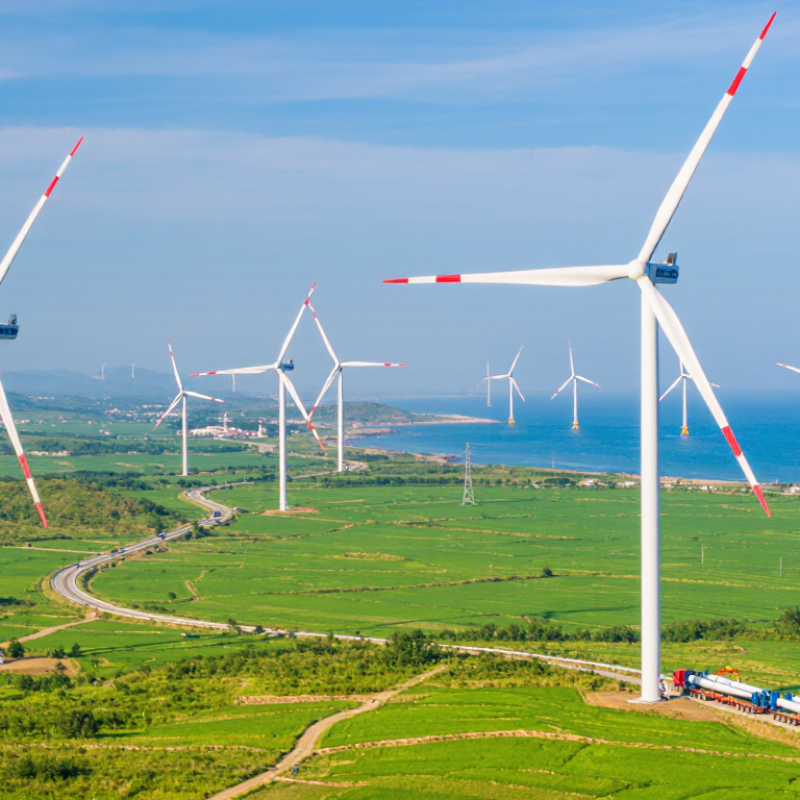
China Top 10 Industrial Wind Turbine Solutions
China’s industrial wind turbine market is moving beyond large coastal projects. Inland provinces now seek equipment for weaker winds, higher elevations, and limited grid capacity. The strongest solutions include utility-scale onshore turbines, distributed turbines, low-wind models, high-altitude systems, and typhoon-resistant designs. Direct-drive and geared systems serve different maintenance and efficiency needs. Hybrid wind-storage projects are also gaining attention.
Field assessments show that site conditions decide value more than rated capacity. A larger rotor may capture more energy, but it can increase transport, foundation, and repair costs. That trade-off is often underestimated. China’s extensive manufacturing base supports local blades, generators, control systems, and towers. This shortens delivery times and improves access to replacement parts. However, supply chain strength does not remove every risk. Grid connection delays and regional curtailment can still reduce project returns.
Digital monitoring has become a practical industrial solution. Sensors can track vibration, temperature, blade damage, and power quality. Predictive maintenance reduces unnecessary service visits, especially in remote areas. Retrofit programs offer another path for aging turbines with weak output or obsolete controls. Yet software alerts are not always accurate. Operators still need trained technicians and clear inspection records. Market growth will depend on reliable performance data, flexible grid planning, and designs matched to local weather, terrain, and industrial demand.
The entries below are technology and project-solution categories, not a ranking of manufacturers or market share. Suitability depends on site wind conditions, grid access, permitting, project economics, and applicable technical standards.
| No. | Solution Category | Typical Configuration | Best-Fit Application | Key Advantages | Main Considerations |
|---|---|---|---|---|---|
| 1 | Utility-scale onshore wind | Large horizontal-axis turbines installed in multi-turbine wind farms | Wind-resource areas with suitable land, road access, and grid connection | Established project model; can supply substantial electricity to the grid | Requires wind-resource assessment, land-use approvals, grid studies, and environmental review |
| 2 | Low-wind-speed onshore systems | Turbines designed with larger swept areas and operating characteristics suited to lower-wind sites | Sites with moderate wind speeds, including some inland and distributed-resource areas | Can improve energy capture where average wind speeds are lower than at traditional high-wind sites | Performance is site-specific; hub height, turbulence, terrain, and local wind data matter |
| 3 | High-altitude and complex-terrain wind | Onshore turbines configured for mountainous or elevated terrain, supported by detailed micrositing | Mountainous regions and other areas with complex wind flow | Can make use of wind resources that are not available on simpler terrain | Access roads, transport logistics, turbulence, foundation design, and construction conditions can be challenging |
| 4 | Nearshore and coastal onshore wind | Land-based turbines located near the coast, using corrosion-aware components and site-specific foundations | Coastal areas with suitable land, wind resources, and grid infrastructure | May benefit from coastal wind conditions and proximity to industrial demand or transmission assets | Salt exposure, typhoon risk in relevant regions, coastal permitting, and competing land uses require assessment |
| 5 | Fixed-bottom offshore wind | Offshore turbines mounted on foundations such as monopiles or jacket structures | Sea areas with water depths and seabed conditions suitable for fixed foundations | Accesses offshore wind resources and supports large wind-farm projects | Needs marine surveys, subsea cables, specialized installation vessels, port capacity, and marine approvals |
| 6 | Floating offshore wind | Turbines mounted on floating platforms, held in position by mooring systems and anchors | Deeper-water sites where fixed-bottom foundations are not suitable | Can extend offshore wind development into deeper waters | Commercial deployment is less mature than fixed-bottom offshore wind; platform, mooring, cable, and installation costs are important factors |
| 7 | Distributed wind for industrial users | One or more turbines connected near a factory, industrial park, or local distribution network | Facilities with suitable local wind resources, available space, and compatible grid arrangements | Can support local electricity supply and complement grid purchases | Requires assessment of load profile, turbine siting, safety setbacks, grid connection, and local approvals |
| 8 | Wind-solar-storage hybrid systems | Wind turbines coordinated with solar generation, battery storage, and power-control equipment | Renewable-energy bases, industrial parks, and projects seeking coordinated generation and storage | Can combine different generation profiles and provide storage-based operating flexibility | System value depends on resource complementarity, dispatch rules, storage sizing, and grid requirements |
| 9 | Wind with flexible industrial loads | Wind generation coordinated with adjustable processes, such as eligible pumping, heating, or production loads | Industrial sites able to shift some electricity use to periods of higher renewable output | Demand flexibility can help align electricity use with variable wind generation | Process limits, product quality, operating schedules, and control-system integration must be considered |
| 10 | Repowering and life-extension solutions | Replacement, upgrade, or continued operation of existing wind-farm equipment after engineering assessment | Operating wind farms where equipment condition, resource data, or project requirements have changed | May improve asset performance or extend useful service when supported by a sound technical and economic case | Requires structural and electrical inspections, permitting review, grid assessment, and end-of-life planning for components |
Match the turbine to local wind, terrain, grid capacity, and maintenance access. Rated capacity alone can mislead.
Not necessarily. They may capture more energy, but transport, foundation, and repair costs can rise. That trade-off is easy to miss.
Direct-drive systems reduce gearbox complexity. Geared systems can suit particular operating conditions. Compare service needs and expected performance at the site.
Sensors track vibration, temperature, blade stress, and generator output. Early warnings may reveal bearing wear. Alerts can be wrong, though.
Factories, mines, ports, farms, and wastewater plants can use wind power. Remote towers and island microgrids may combine turbines with solar or batteries.
Review wind measurements, turbulence, icing, salt exposure, noise, and transport routes. Check emergency access and spare-part availability too.
Weak grids may need converters that support voltage control and smoother power delivery. Connection delays or curtailment can reduce project returns.
Check battery replacement costs and power-quality requirements. A remote mining site may need storage during calm periods. The numbers deserve a second look.
Retrofit programs can update controls or address weak output. Verify production records, downtime, and inspection reports before deciding. Retrofits are not magic.
China’s industrial wind energy sector is evolving through advances in turbine design, materials, control systems, and grid integration. This overview introduces the market landscape and explains how technologies such as larger rotor designs, intelligent monitoring, and improved power conversion can support dependable energy generation. It also presents ten types of Industrial Wind Turbine Solutions organized by their potential applications, from utility-scale projects to industrial sites with specific operating needs.
A comparative discussion considers performance, energy efficiency, durability, and maintenance requirements, while emphasizing that results depend on local wind conditions and project design. The final section outlines practical selection criteria, including site assessment, required output, installation constraints, grid access, lifecycle costs, and service capabilities. Together, these topics provide a structured starting point for evaluating turbine options and matching a solution to a project’s technical and economic priorities.